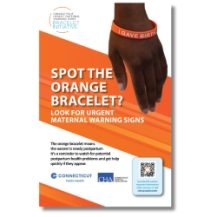
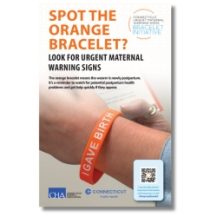
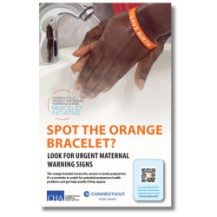
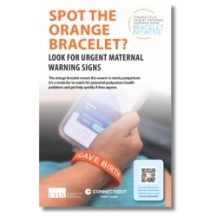
This recorded webinar is specifically designed to train EMS personnel and ED staff to support individuals wearing an orange bracelet.


This toolkit houses a robust repository of resources specifically curated to support birthing hospitals’ implementation of the Connecticut Urgent Maternal Warning Signs Bracelet Initiative at their facilities and in partnership with community-based organizations and healthcare providers. In addition to the materials featured on the main webpage, resources in the toolkit include training webinars, a hospital implementation process guide and checklist, digital posters for facility displays, shareable social media graphics, and more. The toolkit may be accessed via the main webpage or directly through this link: cthosp.org/bracelet/toolkit

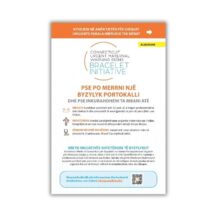
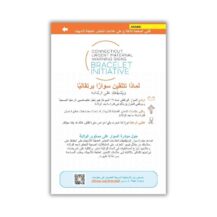
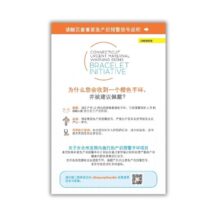
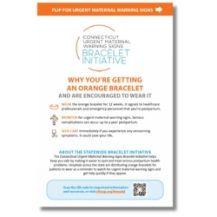
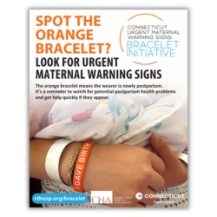
The Bracelet Initiative — a state-funded effort led by the Connecticut Perinatal Quality Collaborative (CPQC) and the Connecticut Hospital Association (CHA) — aims to reduce maternal morbidity and mortality by improving clinical awareness of potential postpartum complications and conditions. Starting in the fall of 2025, birthing hospitals across the state are providing postpartum patients with an orange bracelet and an informational handout before leaving the hospital. The bracelet signals to healthcare professionals and first responders that the wearer is newly postpartum, enhancing timely recognition of and response to symptoms of potentially serious postpartum complications, known as “urgent maternal warning signs.” Complications may include eclampsia, blood clots, sepsis, cardiomyopathy, and perinatal depression. The Bracelet Initiative educates healthcare providers, including emergency department (ED) staff, and emergency medical services (EMS) personnel on standardized lifesaving protocols, ensuring postpartum patients seeking emergency services are identified and triaged appropriately. The initiative is funded through grants awarded to CHA by the Connecticut Departments of Public Health (DPH) and Children and Families (DCF).
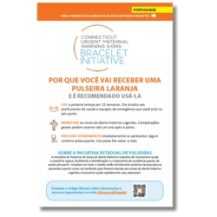
Orange bracelets are worn for a shorter period (12 weeks) because while serious complications can happen up to a year postpartum, the most critical, immediate life-threatening issues — like hemorrhage, blood clots, and eclampsia — often peak or present within the first few weeks to months, aligning with the recommended duration of wearing the bracelet to alert providers to ongoing risk after hospital discharge.
Blank orange bracelets are available as an option to those who do not leave the hospital with a newborn due to situations such as a stillbirth, surrogacy, adoption, or loss of custody of a child at birth.
Hospital staff, EMS personnel and ED staff, and community-based healthcare providers are invited to watch on-demand recordings of the introductory virtual webinars held in September 2025. At the end of each training, participants will be able to: identify that an individual wearing an orange bracelet is postpartum, recognize urgent maternal warning signs, and connect postpartum patients experiencing complications to care. Registration is required to access the recordings. Click the links below to register.
Continuing education credits are available for one year from the live training dates. After one year, the sessions will still be accessible, but continuing education credits will no longer be offered.
This recorded webinar is specifically designed to train EMS personnel and ED staff to support individuals wearing an orange bracelet.
This recorded webinar is specifically designed to train hospital staff and healthcare providers to support individuals wearing an orange bracelet.
Audience: OB staff, NICU staff, social work, and direct service and administrators, such as patient registration and triage staff
This recorded webinar is specifically designed to train healthcare providers at community-based organizations to support individuals wearing an orange bracelet.
Audience: community providers who work with pregnant and postpartum people, such as: Women, Infants and Children (WIC) staff, home visiting staff, community health center staff, lactation consultants, community doulas, health department staff, OB-GYN offices, urgent care center staff, and pediatrician office staff
The Bracelet Initiative kickoff event on Tuesday, September 30, 2025, featured informative presentations from the Connecticut Department of Public Health (DPH) and ACCESS Mental Health for Moms. This master slide deck compiles all presentations. Providers are encouraged to download and print the file for educational purposes.
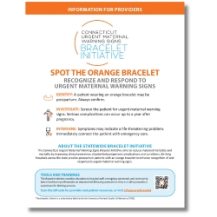
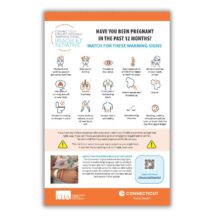
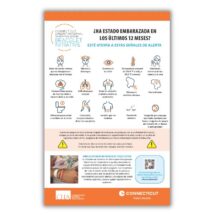
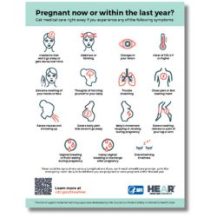
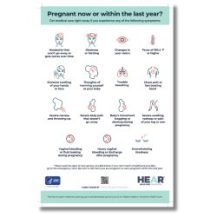
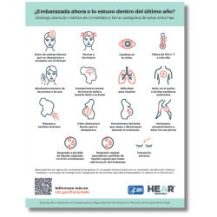
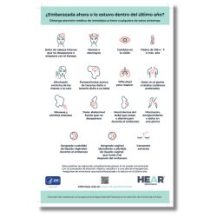
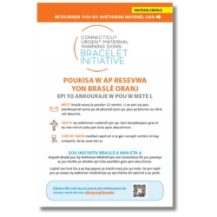
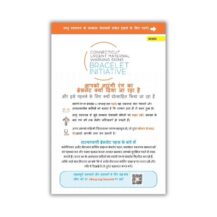
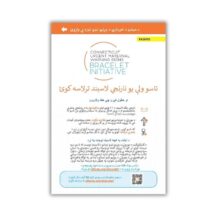
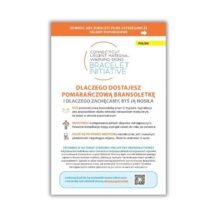
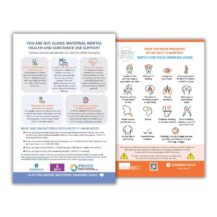
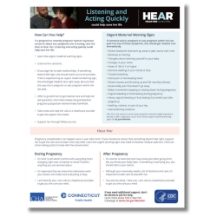
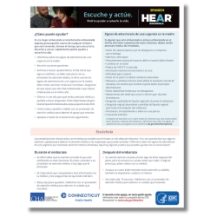
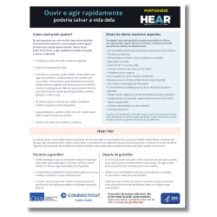
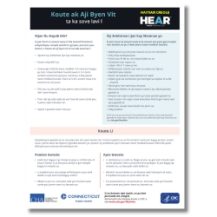
Hospitals can integrate educational materials into both provider training and patient education. Use these tools to reinforce urgent maternal warning signs with patients and families. Organizations are welcome to add their logos to these materials. High-resolution copies of all materials are available upon request by emailing communications@cthosp.org.
Bracelet Initiative participants may have needs that require assistance from state agencies or national programs. Additional maternal and infant health resources are listed below.
United Way of Connecticut has prepared an eLibrary paper on the Bracelet Initiative that can be accessed through the 211 Connecticut website.
On October 16, 2025, Connecticut Public Health Commissioner Manisha Juthani distributed a memo to all licensed healthcare providers to raise awareness about the Bracelet Initiative.
In 2016, founder Charles Johnson lost his wife Kira during a routine C-section at Cedar Sinai hospital in Los Angeles, California. He founded 4Kira4Moms in 2017 as a response to his experience, to be a voice for other mothers and families facing unnecessary maternal loss, and putting an end to the maternal mortality health crisis.
To obtain and use the official Bracelet Initiative logo on related materials, please email communications@cthosp.org.
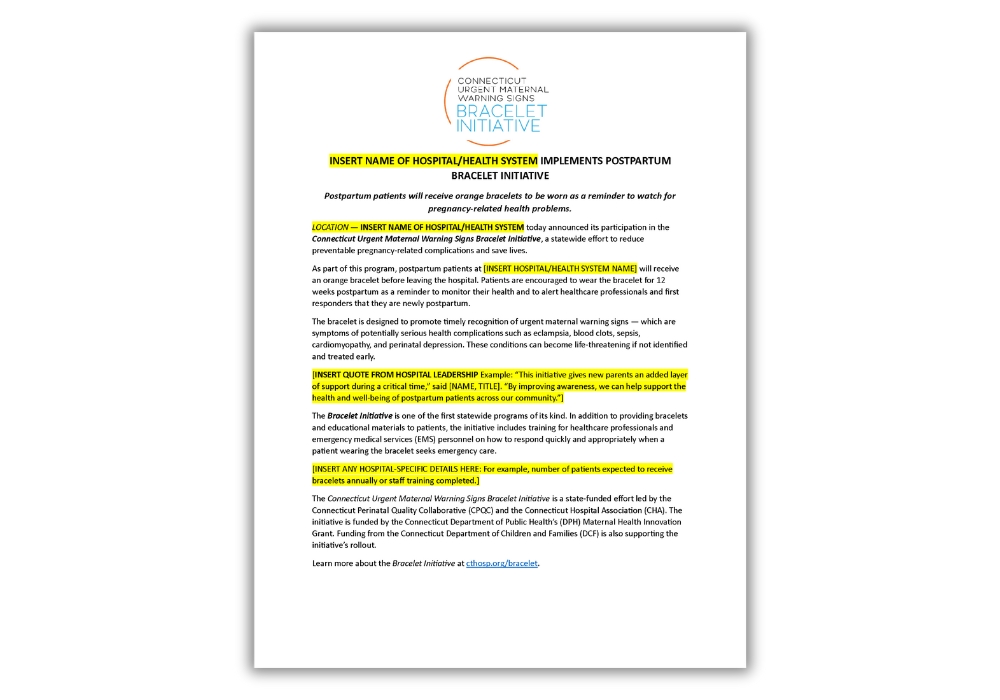
Participating hospitals are welcome to download and customize the press release template to assist in messaging around their facility’s Bracelet Initiative implementation. Click the link below to download the document.
To amplify patient, provider, and community awareness of the Connecticut Urgent Maternal Warning Signs Bracelet Initiative, CHA launched a statewide social media campaign with support from the Department of Public Health (DPH). The campaign was live on LinkedIn and Meta platforms from May 11, 2026, to June 21, 2026.
Graphics are available for download below.
While silicone is technically recyclable, it’s not commonly accepted in curbside recycling programs. If you are interested in establishing a recycling program at your hospital, the following businesses recycle silicone products, including bracelets.
 In 2024, several Connecticut hospitals contemplating the creation of postpartum bracelet programs in their facilities requested that the Connecticut Perinatal Quality Collaborative (CPQC) scale the concept into a statewide initiative. CPQC participants supported the coalition pursuing the idea as a quality improvement (QI) project to complement the group’s ongoing efforts to address maternal morbidity and mortality in the postpartum period.
Hartford HealthCare and Trinity Health Of New England implemented bracelet programs in their respective health systems in the spring of 2025. The hospital leaders who built those programs collaborated with the CPQC and CHA to shape and execute the kickoff of the statewide Bracelet Initiative that fall. All initiatives are identical in purpose, design, and scope.
According to the Connecticut Maternal Mortality Review Committee’s 2015-2020 Pregnancy-Related Deaths in Connecticut report, more than half of pregnancy-related deaths occur during the postpartum period, and most are considered preventable. This is consistent with national data. The Bracelet Initiative was designed to increase community awareness of preventable postpartum complications and conditions; ensure that birthing persons are empowered to seek help when experiencing symptoms of postpartum complications; and educate healthcare providers on potential complications during the postpartum period. Postpartum bracelet programs have produced positive results in other geographic areas. For example, East Carolina University Health Medical Center in North Carolina reduced postpartum readmissions from 2.24% in 2019 to 1.47% in 2022 after implementing postpartum bracelets. Other initiatives on urgent maternal warning signs have demonstrated improved timely ER recognition and triage of postpartum patients. For example, FHN Memorial Hospital in Illinois saw an increase in the percentage of postpartum patients moving from registration to triage in 10 minutes or less, from 38% to 61%.
The Connecticut Urgent Maternal Warning Signs Bracelet Initiative toolkit was developed with financial support provided by the state Department of Public Health and Department of Children and Families. This publication does not express the views of the Departments or the State of Connecticut. The views and opinions expressed are those of the authors. CDC Hear Her materials available through the toolkit have been developed by the federal government.