
WEEKLY UPDATE: 10/22/26
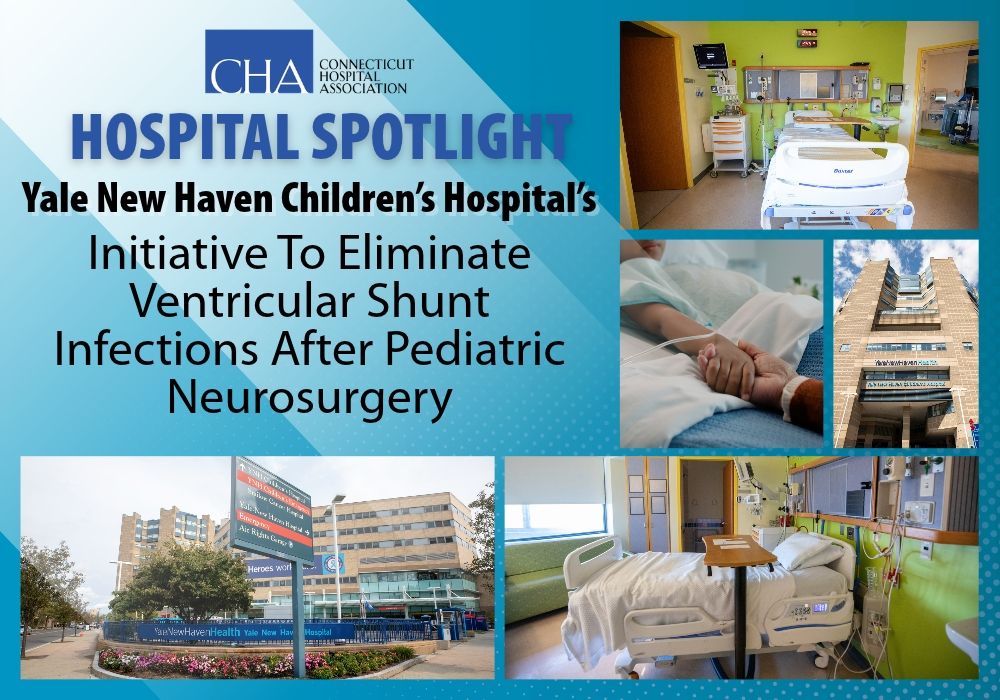
The Connecticut Hospital Association (CHA) continues the new Hospital Spotlight Series* with a feature on Yale New Haven Children’s Hospital’s strategies to eliminate pediatric postoperative cerebral spinal fluid (CSF) ventricular shunt surgical site infections (SSI), in observance of International Infection Prevention Week (IIPW).
From September 2023 to July 2024, Yale New Haven Children’s Hospital (YNHCH) saw a cluster of postoperative CSF shunt infections. The infection rate reached 23% (6/26). Prior to this cluster of infections, the pediatric neurosurgery team had achieved more than 600 days without an infection. YNHCH got to work identifying the causes of the spike in infections, then used their findings to inform interventions for pre, intra, and postoperative care.
Using the Model for Improvement, YNHCH first identified a multidisciplinary team comprising quality and safety specialists, infection prevention, neurosurgery providers, front line nurses, and supply chain staff. The team then followed Plan-Do-Study-Act cycles to coordinate optimized care across both ambulatory and inpatient areas.
Examples of successful interventions included creating preoperative and postoperative care instructions for families, improving access to antibiotic impregnated shunt catheters, and revising protocols for enhanced monitoring of surgical sites, such as directing families to upload pictures of the surgical site to the electronic health record seven days after discharge.
Having a child experience a postoperative SSI not only prolongs hospitalization but also adds unnecessary exposure to long-term antibiotics, increased morbidity and mortality, along with the added financial burden on both the family and the organization.
With these added interventions in place, YNHCH has not seen a CSF ventricular shunt postoperative SSI in 800 days and counting.
Dive Deeper
YNHCH created key driver diagrams for pre, intra, and postoperative periods involving stakeholders from each clinical area. Plan-Do-Study-Act cycles addressed preoperative chlorhexidine treatment, increased use of antibiotic impregnated shunt catheters, and postoperative monitoring of the incision. Tracking compliance with preoperative chlorhexidine treatments and hair washing was done following each procedure, along with monitoring the use of antibiotic impregnated catheters. The use and timing of antibiotics prior to incision was recorded. There is ongoing process measurement of interventions, which is reported back to the team monthly to inform additional interventions.
Many of the interventions and enhanced bundle elements centered around ensuring adherence to best practice. The neurosurgery preoperative note by providers was optimized to include ordering of chlorhexidine bathing prior to surgery and hair washing. This ensured that the treatment was ordered with tracking of compliance. YNHCH’s ambulatory clinics were able to secure a chlorhexidine bathing product to provide to families at the preoperative neurosurgical visit. Prior to the change in the progress note in April 2024, ensuring consistent ordering of chlorhexidine, the average compliance to chlorhexidine preoperatively was approximately 22%. Following the changes, the average compliance increased to 68%.
Engaging YNHCH’s neurosurgery nurse coordinators became essential in the postoperative time period. A process was developed that allowed the family to upload a photo of the postoperative incision to the electronic health record patient portal seven days after surgery, along with a phone call from the coordinators and review of the incision by the providers. This process ensured the team was able to identify any incisions that were not healing properly, leading to an earlier postoperative visit if needed.
Along with preoperative and postoperative interventions, the team worked to ensure consistent supply and use of antibiotic impregnated shunt catheters. This included gathering buy-in from the neurosurgeon to use these catheters along with working with the supply representative to validate that YNHCH would have consistent product available for patients, with this occurring in October of 2024. Prior to consistent product availability, YNHCH was averaging 20% compliance with use of antibiotic impregnated catheters. After October 2024, this average increased to 57% compliance, with consecutive months having 100% compliance for cases.
This program information was submitted by Yale New Haven Children’s Hospital for consideration for the 2026 John D. Thompson Award for Excellence in the Delivery of Healthcare Through the Use of Data. The 2027 CHA Annual Awards are now open for submissions through January 13, 2027. Click here to learn more and enter.
*Connecticut hospitals and health systems are constantly developing and implementing innovative, collaborative approaches to care to meet the evolving needs of their patients and communities. Through the Hospital Spotlight Series, CHA will showcase initiatives that are transforming care delivery, advancing health equity, and elevating the world-class, high-quality care for which Connecticut is known. Each spotlight offers a closer look at one of the countless programs underway across the state.