WEEKLY UPDATE: 02/12/26
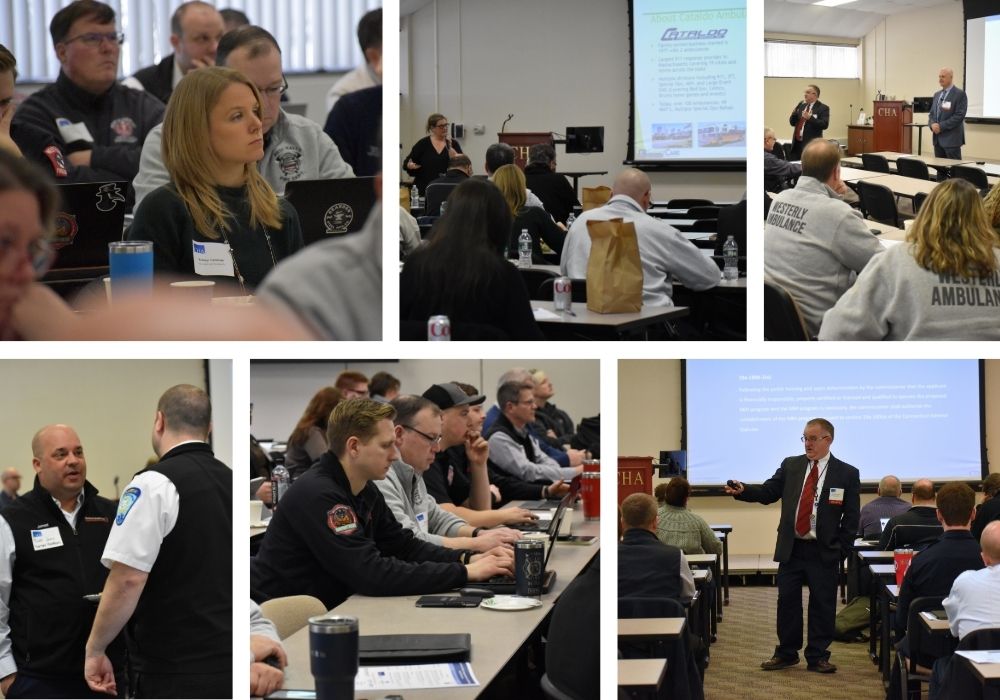
Emergency medical services (EMS) personnel, providers and other community partners from across the state convened at the Connecticut Hospital Association (CHA) in Wallingford on Tuesday, February 10, for an all-day conference on Mobile Integrated Healthcare (MIH) programs.
The Department of Public Health’s (DPH) Office of Emergency Medical Services (OEMS) is actively accepting applications for paramedic-level ambulance services to develop MIH programs, in collaboration with community partners, designed to meet the unique healthcare needs in their municipalities. OEMS began accepting applications in March 2025, after MIH programs were authorized and regulations were implemented in 2024 under §Sec. 19a-180 of the Connecticut General Statutes.
While new to Connecticut, several robust MIH programs have been implemented across the country. MIH programs are patient-centered healthcare models that provide care or preventive services in a patient’s home or mobile environment. The purpose of MIH programs is to reduce unnecessary or preventable emergency department (ED) visits and hospitalizations, improve patient access to care, promote healthy outcomes, increase collaboration between healthcare providers, and decrease costs throughout the healthcare delivery system. MIH programs integrate with other entities, such as social services agencies, hospitals, local physicians, local health departments, and other community resources.
Michael Zacchera, OEMS MIH coordinator, and Josh Beaulieu, director of operations for Hartford HealthCare’s American Ambulance Service, Inc., provided an overview of MIH, reviewed Connecticut’s MIH resources, and walked participants through the OEMS application approval process.
Clinical leaders of the MIH programs from Monadnock Community Hospital in New Hampshire and Cataldo Ambulance Service, Inc. in Massachusetts presented on each organization’s approach, highlighting how successful programs can vary broadly in form and function while synchronizing clinicians, infrastructure, and resources in a cost-effective manner.
MIH programs can improve health outcomes and wellness by:
- Providing post-discharge follow-up
- Navigating care to non-emergency department settings
- Managing chronic illnesses
- Helping with medication management
- Connecting patients with social and community services
- Addressing behavioral, mental health, and substance abuse
Examples of MIH activities include, but are not limited to:
- Telephone advice instead of resource dispatch
- Chronic disease management
- Preventive care or post-discharge follow-up
- In-home hospital care/primary care
- Transfer or referral to care beyond hospital emergency departments
- Navigation to community-based care services
EMS organizations are encouraged to submit applications online at the OEMS website. Click the links below for more information: