WEEKLY UPDATE: 06/12/25
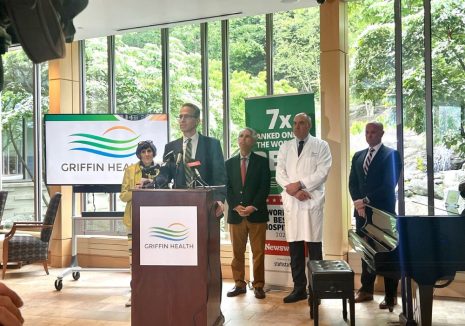
On Monday, June 9, leaders from Griffin Health, Middlesex Health, Yale New Haven Health, and the Connecticut Hospital Association (CHA) joined U.S. Representative Rosa DeLauro for a joint press conference at Griffin Hospital in Derby, Connecticut, to discuss how proposed federal Medicaid cuts would jeopardize access to care for all patients.
Connecticut hospitals continue to emphasize the importance of protecting this critical program that serves as a crucial safety net for nearly 1 million children, individuals with disabilities, and low-income adults — equal to an estimated 25% of the state’s population. Medicaid supports a wide range of services, including mental health, substance use treatment, and preventive care.
In May, the Republicans in the U.S. House of Representatives approved legislation that would significantly shrink federal healthcare spending, predominantly in Medicaid and Medicare, impose caps on provider taxes and state-directed payments, and penalize states that offer Medicaid-like health insurance coverage to residents regardless of immigration status, even if the program does not draw from federal funds. The “One Big Beautiful Bill Act,” a primary goal of which is to subsidize the extension of President Donald Trump’s 2017 tax cuts, moved to the GOP-controlled Senate in early June. If the Senate alters the legislation, the budget reconciliation bill will have to go back to the House for final approval. Congress hopes to send the bill to the president’s desk by July 4.
The House bill seeks to slash Medicaid spending by hundreds of billions by introducing new work requirements, shortening the enrollment period, and requiring states to impose cost-sharing of up to $35 for certain services, among other measures to eliminate what Republicans say is “waste, fraud, and abuse” in the system.
“What this does is act as a barrier,” Griffin Health CEO Patrick Charmel remarked at the press conference. “People will see they have an out-of-pocket responsibility and just won’t pursue the care that they need.”
If patients delay preventive care as a result of federal actions, the burden on emergency departments will increase as patients seek treatment for conditions that could have been avoided with early interventions. Hospitals would shoulder the costs of these increased admissions.
Hospitals and health systems rely on Medicaid funding, in addition to other payers, to maintain their operations and provide care to all patients, regardless of their ability to pay. In 2023, Connecticut’s hospitals faced a staggering $76 million loss in operating revenue and continue to operate at a loss. Over the past year, healthcare costs have skyrocketed — drugs, medical supplies, and workforce expenses increased by $1 billion. If Medicaid is cut, hospitals will face even greater financial challenges, making it more difficult to advance healthcare innovation, health equity, and affordability.
“Cuts to programs that support our communities like Medicaid will stress that ecosystem further and bring changes, challenges, and collapses to some of our critical infrastructure across the state of Connecticut,” said Dr. Thomas Balcezak, Chief Clinical Officer, Yale New Haven Health System.
Vin Capece, president and CEO of Middlesex Health, also attended the press conference and spoke about the potential negative impact on communities and the importance of preserving and protecting care.
The impact of Medicaid cuts would not only be felt by those directly enrolled in the program. It would reverberate throughout the state’s healthcare system. Costs would shift to those with private insurance, driving up what employers and their employees pay for healthcare.
“Premiums for individual plans sold on Access Health CT will increase by as much as 25% next year,” Rep. DeLauro said.
Click here to read CHA’s recent op-ed on hospitals’ ongoing advocacy to safeguard Medicaid.
Click here to watch WTNH’s coverage of the press conference.