WEEKLY UPDATE: 11/06/25
As a result of the more than month-long federal government shutdown, the U.S. Department of Agriculture (USDA), which oversees the Supplemental Nutrition Assistance Program (SNAP), said it would freeze payments starting November 1 — until a legal challenge forced the Trump administration to continue at least partially funding the food aid program. After a coalition of 26 states, including Connecticut, sued the Trump administration for its scheduled SNAP suspension, two federal judges ruled Friday, October 31, that the USDA must use its $5 billion contingency fund to provide partial benefits — about 50% of normal levels — during the shutdown. According to the White House, benefits will be delayed in November regardless of the outcome of the court cases because many beneficiaries have their electronic benefit transfer (EBT) cards recharged early in the month, and the process of loading cards can take a week or more in many states.
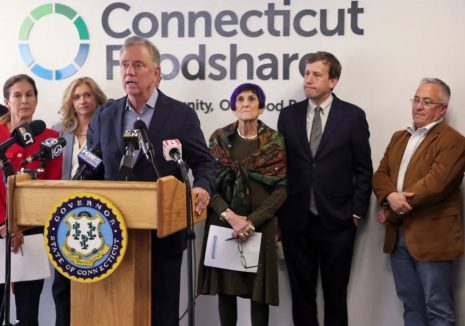
SNAP costs about $8 billion per month nationally and $72 million per month in Connecticut. More than 360,000 Connecticut residents receive SNAP benefits, and about one-third are children. On Monday, October 27, at a press conference attended by a group of bipartisan state lawmakers, the Lamont administration announced the allocation of $3 million in emergency state funding to Connecticut Foodshare to support SNAP beneficiaries during the shutdown. Connecticut Foodshare said the infusion of funds will be enough to provide six million meals for two weeks through the network of more than 650 community-based food banks, meals programs, and mobile food pantries that the nonprofit organization supplies.
Governor Ned Lamont, Attorney General William Tong, and U.S. Senator Richard Blumenthal (D-CT) convened a press conference on Monday, November 3, at the Hands on Hartford Manna Food Pantry. Lamont said his administration’s top priority is sustaining SNAP benefits and other federally funded programs in jeopardy due to the shutdown, including the Low-Income Home Energy Assistance Program (LIHEAP) and Special Supplemental Nutrition Program for Women, Infants and Children (WIC).
“We are going to have enough money in place on a bipartisan basis to make sure we can take care of people as long as it takes, when it comes to WIC, when it comes to SNAP cutoff, when it comes to LIHEAP going forward,” Lamont said, announcing an agreement with state lawmakers to create a $500 million contingency fund to preserve social services if federal funds run dry.
The Department of Social Services (DSS) has posted a list of answers to frequently asked questions about the shutdown’s impact on SNAP benefits in Connecticut.
Separate from the shutdown, policy changes in H.R.1, or the One Big Beautiful Bill Act, will cut $186 billion of federal funding for SNAP over the next decade nationally, by expanding work requirements, limiting cost adjustments, and shifting expenses to states. A recently released DataHaven report estimates 58,000 Connecticut families, making up about a quarter of all families in the state receiving SNAP, will lose an average of $194 in benefits each month due to H.R.1.