WEEKLY UPDATE: 04/17/25
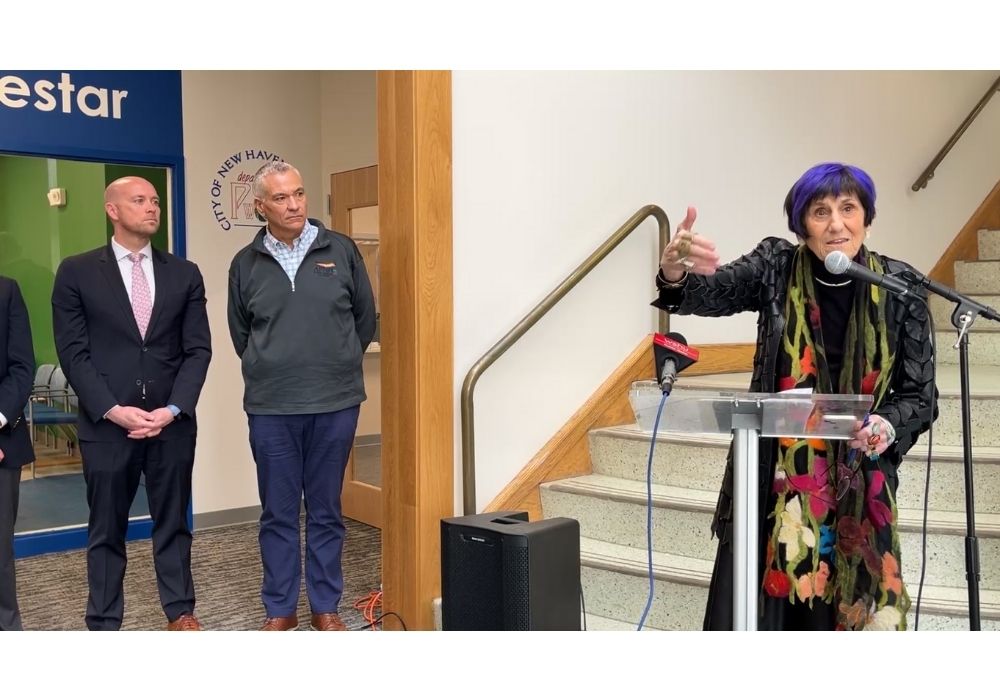
On Wednesday, April 16, the Connecticut Hospital Association (CHA) joined U.S. Representative Rosa DeLauro for a press conference at the New Haven Health Department to discuss federal threats to public health. The event convened public health officials, healthcare providers, and community leaders to shed light on what’s at stake for Connecticut patients and begin to mobilize a regional response.
Connecticut’s congressional delegation continues to champion the Medicaid program and lead efforts against proposals that could put public health and social services in the crosshairs of federal funding reductions. The delegation has demonstrated its dedication to amplifying the voices of providers, patients, and communities that would suffer the devastating consequences should federal cuts advance.
“Our voices must be heard at the highest decibel,” Rep. DeLauro said.
“It’s often too easy to think, ‘Well, I’m not on Medicaid, that doesn’t affect me,’ or ‘I get my immunization from my primary care physician, so that doesn’t affect me.’ It does affect all of us. We all use hospitals. We all use health systems,” Paul Kidwell, senior vice president of policy, CHA, said in his remarks.
Hospitals and health systems rely on Medicaid funding, in addition to other payers, to maintain their operations and provide care to all patients, regardless of their ability to pay. In 2023, Connecticut’s hospitals faced a staggering $76 million loss in operating revenue and continue to operate at a loss. Over the past year, healthcare costs have skyrocketed — drugs, medical supplies, and workforce expenses increased by $1 billion. If Medicaid is cut, hospitals will face even greater financial challenges, making it more difficult to advance healthcare innovation, health equity, and affordability. Additionally, if preventive care services and other critical programs are endangered as a result of federal actions, the burden on emergency departments will increase as patients seek care for conditions that could have been avoided with early interventions and treatment. Hospitals would shoulder the costs of these increased admissions, which will only exacerbate financial stress and further strain care delivery.
Referencing the wellness center at the New Haven Public Health Department, Kidwell said, “If people can’t come to a wellness center to manage their chronic condition, they end up in the hospital emergency department much sicker than they otherwise would be… Whether or not you feel it directly every day, you will feel it over time in our ability to respond to things that are preventable and manageable.”
Medicaid serves as a critical safety net for more than 1 in 4 people in Connecticut, providing access to healthcare for those who need it most. This includes children, individuals with disabilities, and low-income adults who rely on the program for both general and specialized care. Approximately 40% of all births in the state are covered by Medicaid, and the program funds approximately 74% of nursing home care in Connecticut. It also supports a wide range of services, including mental health, substance use, and preventive care. Taken in whole, more than 940,000 people in Connecticut depend on Medicaid for their healthcare.
The members of Connecticut’s congressional delegation have been unwavering in their efforts to protect Medicaid, working tirelessly in Washington to prevent reductions to the vital program. Their support and continuous advocacy underscore that the preservation of Medicaid is a priority for the people of Connecticut.
Click here to read CHA’s recent op-ed in the Hartford Courant highlighting the importance of safeguarding Medicaid and protecting healthcare.