
A government-run health plan would hurt already struggling hospitals. As financial pressures grow, hospitals may be forced to cut services, and in the worst cases, even close — eliminating access to care for entire communities.



More expensive insurance is not an option.
Losing your doctor is not an option.
Higher healthcare costs are not an option.

The proposed “Connecticut Option” could reduce patient choice and increase costs for families and employers. Connecticut should strengthen what works in healthcare — not create a new government-run plan that risks access and affordability.
A state government-run “Connecticut-option” health plan is often promoted as a way to lower healthcare costs, providing help when people are facing higher insurance costs and losing federal subsidies for coverage. However, by restricting patient choice and limiting provider payment, a public option fails to provide the relief and affordability people need.
It would also be backstopped by taxpayers at a time when families are already struggling with rising costs everywhere they turn.
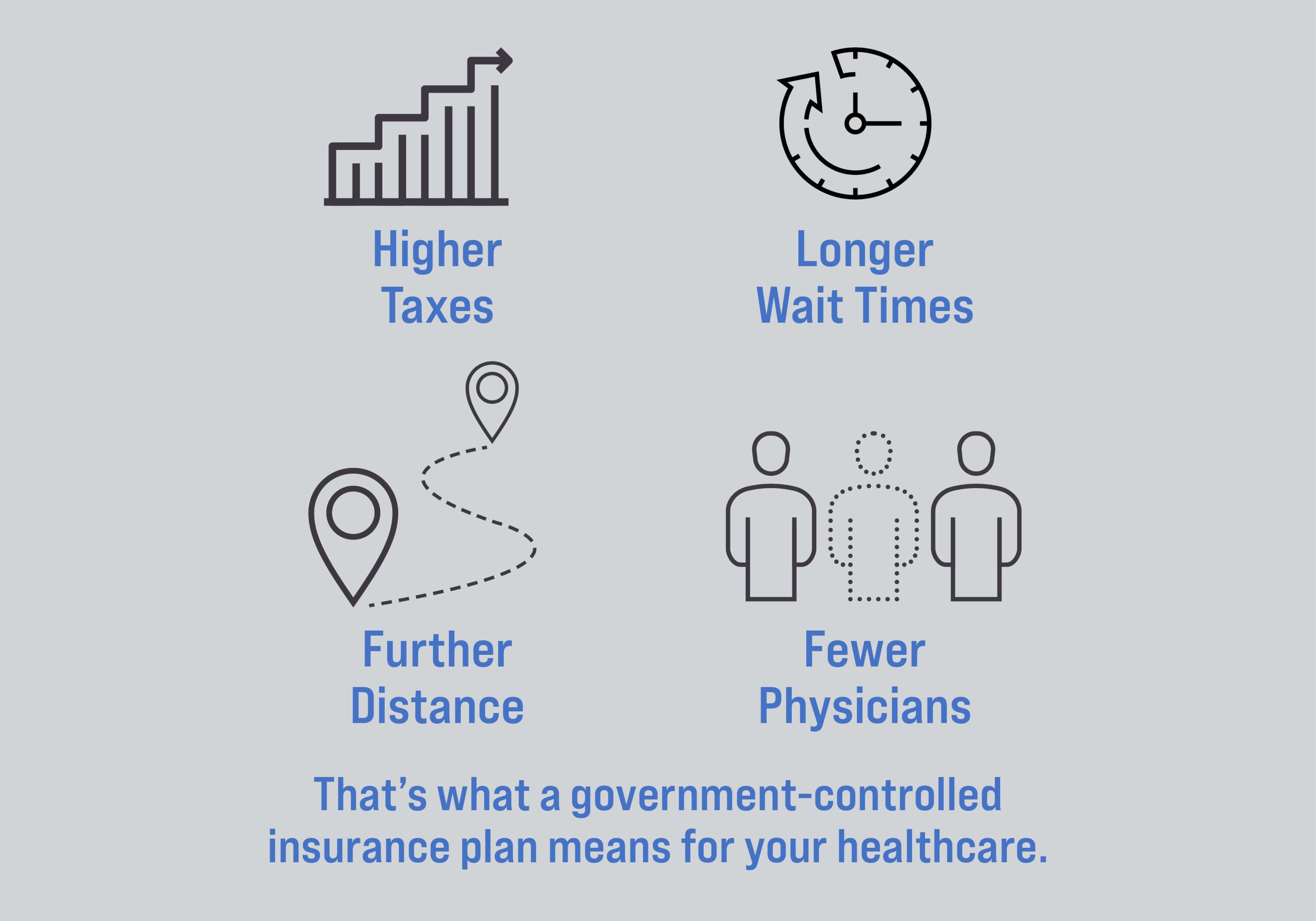
A state-run health plan relies on restricting where patients can go for care and setting limits on what caregivers are paid — further destabilizing the financial health of healthcare providers at a time when federal pressures are growing. The result: higher costs for individuals and families with private insurance and employer-based coverage or loss of access to essential services. Expanding this government-run model would worsen cost shifting, raise premiums for families and employers, and reduce access to care.
There is a better way to make healthcare more affordable, especially as we confront the challenges of federal policy shifts. Connecticut should strengthen what works and address what’s broken in healthcare, not create a new government-run plan that repeats known failures. True affordability depends on preserving patient choice, access to trusted providers, and high-quality care.

A government-run health plan would hurt already struggling hospitals. As financial pressures grow, hospitals may be forced to cut services, and in the worst cases, even close — eliminating access to care for entire communities.